WordPress MLS Plugin Guide: IDX Approval, Choosing a Plugin and Installing It
- Buying Buddy
- March 26, 2024
- IDX and Websites, Technology Tips
- WordPress IDX Plugin
- 0 Comments
A WordPress MLS plugin puts listings from your Multiple Listing Service (MLS) on your WordPress site, so buyers can search for homes and contact you from your own website. The listings arrive through IDX. IDX (Internet Data Exchange) is the MLS policy that lets participating agents and brokers display each other’s listings online.
Before you install anything, two things matter: getting approval from your MLS, and picking a plugin that suits your site and the way you follow up with leads.
How a WordPress MLS plugin gets its listings

Under NAR’s IDX policy, MLS participants authorize limited online display of their listings by other participants. So the plugin alone does not give you listings. The agent or broker whose website shows them needs an IDX agreement with their MLS before live data appears.
If you build websites for agents, that agreement belongs to your client, not to you. Ask any plugin vendor you are considering who handles the MLS paperwork and what your site shows while approval is pending.
Plugin or build your own from a data feed?
Some agents skip IDX plugins and build their own listing search instead. They license an MLS data feed or API, then write the search and listing pages by hand or with an AI coding tool. That route can work, and it makes you responsible for the parts listed below.
When you build your own, you take on:
- The data feed itself, including its license terms, on top of your MLS’s IDX approval.
- A database or server that holds or fetches the listings, and the server credentials that connect to the feed.
- The search, results, and listing detail pages, plus the forms that capture leads and a place to send those leads.
- MLS display rules. NAR’s IDX policy requires your display to identify your brokerage firm clearly, to leave out listings whose sellers have opted out of internet display, and to refresh feed-driven listings at least every 12 hours. An MLS that allows listing data to be stored on your servers can also require security measures such as firewalls.
- Every change after launch. When the feed, your MLS’s rules, or your hosting changes, the code has to change with it.
You keep the code working and compliant for as long as the site runs, not only while it is being built.
A ready-made IDX plugin keeps your listings on your own pages and moves only the technical work off your site. With Buying Buddy, listings show on your own domain and your own pages, and each property gets its own page address with a page title and description. Behind those pages, Buying Buddy receives the IDX data feed directly from the MLS, and the listing data, inquiries, CRM and buyer logins run on Buying Buddy’s servers. On WordPress, that means you do not need a database, user management, or MLS API credentials on your site. On other website platforms, the install is a small script, package or app plus widget code, depending on the platform.
You still need your MLS’s IDX approval with either route. If you want full control of the code and are ready to maintain it, building your own can make sense. If you would rather not run that software yourself, a ready-made plugin leaves the feed, the data and the code with the vendor, while the pages stay yours.
Questions to ask before you choose
Use these questions to compare plugins side by side:
- Do property pages sit on your own domain, or inside a frame or subdomain the vendor controls?
- Can you filter listing displays by the MLS fields your market uses, such as city, ZIP code, or property type?
- Which listing statuses can it show? Active, coming soon, pending, sold, and rental listings each suit different pages.
- Where do leads go? A contact form is a start, but a CRM that shows what each lead viewed and saved gives you more to work with.
- What does the vendor say about your web host, your page builder, and any speed or caching plugins you run?
If your site runs on HTTPS, the Buying Buddy post on IDX plugins and SSL security covers what to check there as well.
Where Buying Buddy fits
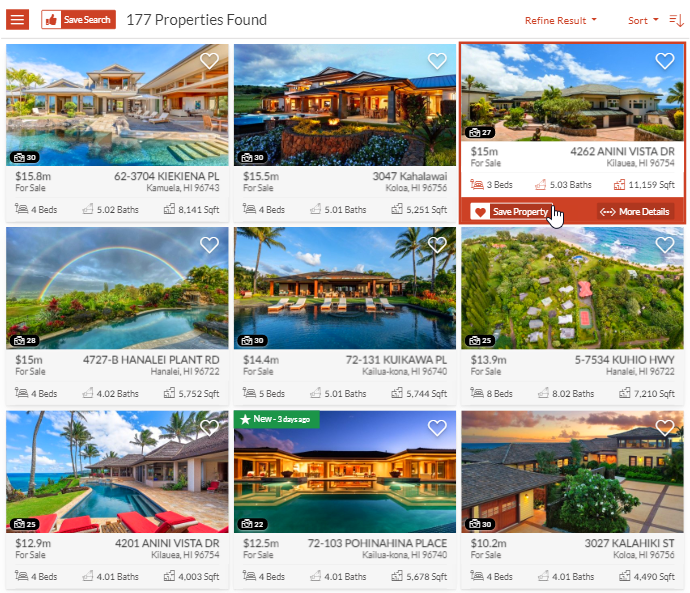
Buying Buddy is an IDX plugin with an integrated real estate CRM, sold as one product. On WordPress, you install it from the WordPress plugin directory and activate it with your account activation key, or choose the free trial from the same activation step. On activation, the plugin creates the foundation pages it needs, such as listing results and listing details.
You place search forms, results, featured listings, market reports, and lead capture forms on your pages with shortcodes, which are short bracketed tags you paste into a page. A Widget Wizard builds the shortcode from the filters you choose. Map search lets buyers draw the area they want, and displays can show active, coming soon, pending, sold, and rental listings.
Listing content stays on your domain, and each property has its own page address based on your listing details page. Each of those pages gets a page title and description that include the property address. Leads from the forms go into the Buying Buddy CRM, which tracks the properties each lead viewed and saved and sends new-listing alerts. Brokerages also get roster and office directory widgets. The full feature list is on the Buying Buddy WordPress IDX plugin page.
Hosting and plugin notes
- GoDaddy Managed WordPress is not supported, because its built-in caching (saved copies of pages served to speed up loading) blocks the plugin. Regular cPanel hosting works.
- Exclude the widget pages from caching plugins, and do not let speed plugins defer the Buying Buddy scripts, which means delaying them until after the rest of the page loads.
- Turn off lazy loading, which holds images back until a visitor scrolls to them, on the listing details page. It can break property photos.
- For SEO plugins, Yoast or All in One SEO are recommended. Rank Math is not, because of known conflicts.
Installation guides for the Buying Buddy WordPress MLS plugin

Steps change as the plugin is updated, so the support site keeps the current instructions, including the shortcodes for each page and the settings to check:
- Install Buying Buddy on WordPress (written guide)
- Video: Install on WordPress
- WordPress builders and plugins: compatibility and notes
Frequently asked questions
Install the Buying Buddy plugin from the WordPress plugin directory, enter your activation key or choose the free trial, and add shortcodes to your pages. The install guide on the Buying Buddy support site has the current steps.
The agent or broker whose website shows the listings needs an IDX agreement with their MLS. If you build the site for an agent, the agreement is in your client’s name.
Yes. You can license an MLS data feed and build your own search and listing pages. You then maintain the database, server credentials, code, and MLS display rule compliance yourself, and you still need your MLS’s IDX approval.
As of October 2026, the Agent plan is $49 per month and the Team or Office plan is $77 per month, with no setup fee or contract. You can start with a 30-day free trial.
Next steps
Write down what your site needs: the searches and listing pages you want, where leads should go, and what your host and page builder allow. Then put the questions above to each vendor. To try Buying Buddy on your own WordPress site, choose the 30-day free trial when you activate the plugin, or compare plans on the pricing page.